

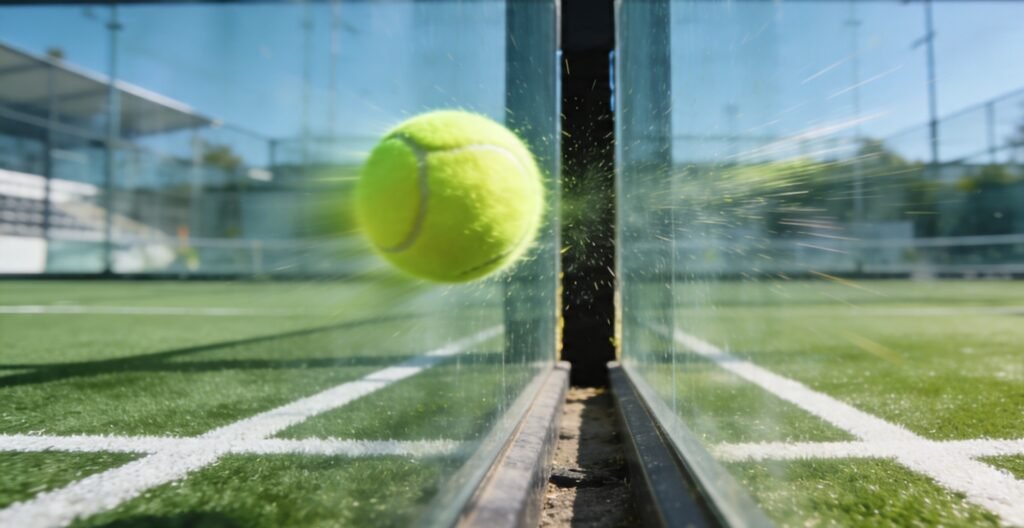
Most beginners spend forty minutes choosing a racket and about three seconds grabbing whatever balls are left in the basket. Here’s why that’s worth reconsidering and the best options to buy at every level and budget.
Why Padel Balls Deserve More Attention
There is a particular kind of padel player – you’ve probably met them at your club, who turns up with a £200 racket and a can of balls they’ve been using since last year. The racket gets the attention. The balls get ignored and yet the balls are the thing that touches your racket every single shot.
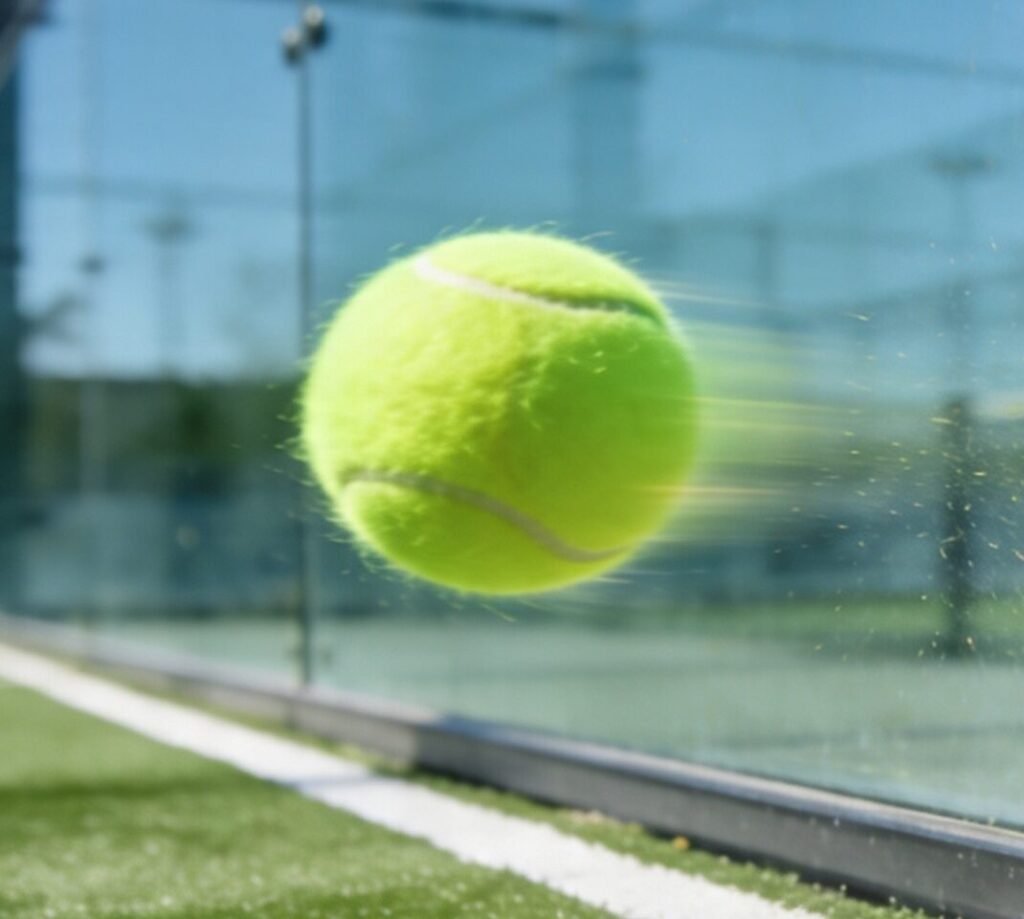
Padel balls look almost identical to tennis balls. But they are not tennis balls. The internal pressure is lower – around 11 psi compared to 14 psi in a tennis ball – producing a slower, more controlled bounce. That lower bounce is fundamental to how padel works: without it, using the walls would send the ball flying out of reach on every rally. Use a tennis ball on a padel court and the game becomes harder to control. Use dead padel balls -ones which have lost their pressure over three months in a bag and you’re effectively playing a different game. What type of game that is we’re not sure, but it out yourself.
None of this means you need to spend a fortune. Good padel balls cost between £3 and £5 per can of three. Knowing which ones to buy and why – takes about eight minutes of reading. This is that eight minutes.
Padel Balls Vs Tennis Balls – Why It Actually Matters
The Pressure Difference
The defining characteristic of a padel ball is its internal pressure. Between 10 -11 psi, padel balls are physically softer than tennis balls. When the ball hits the court, the glass walls, or your racket face, the lower pressure produces a more predictable, controllable response. Padel is designed around it.
A tennis ball on a padel court bounces higher and faster than a padel ball. Shots off the glass walls are harder to gauge. Rallies become more erratic. For a beginner still learning to read the wall angles, it can make the experience frustrating and sometimes disheartening. For an intermediate player trying to develop their technique, it introduces bad habits around timing and positioning.
TLG TIP
Always use proper padel balls.
The Speed Question
Padel balls come in three speed ratings: slow, medium and fast. Most UK clubs use medium-speed balls as the default. Fast balls are typically used on outdoor courts in cold weather, where lower temperatures reduce the internal pressure and slow the ball down – a faster ball compensates for that effect. Slow balls are used at altitude, where thinner air makes the game quicker than intended.
Outdoor padel players are more interested in padel balls for wet and dry conditions. The difference between – wet (humid/rainy) and dry padel balls is their felt coating, internal pressure and weight, which dramatically change how the ball accelerates and bounces. Playing in humid or rainy conditions drastically reduces the ball’s bounce and speed.
TLG TIP
The one thing beginners get wrong about padel balls.
Using dead balls. Pressurised padel balls typically last three to five matches before the internal pressure drops enough to affect their performance. After that, they feel flatter, bounce less predictably, and slow the game down in a way that feels like everyone is playing poorly. Open a fresh can for match play. Use older balls for solo practice or drilling. It’s a small cost with a disproportionate impact on how much you enjoy the game. Once you’ve given up playing padel with the balls – your or a neighbours dog will become your best friend – via a regular supply of balls.
What To Look For When Buying Padel Balls
You don’t need to go deep into the specifications. Four things actually matter:
FIP Approval.
The International Padel Federation sets the standards for ball pressure, bounce and size used in professional competition. FIP-approved balls are guaranteed to meet those specifications. All the balls on this list are FIP-approved.
Speed Rating.
Medium for most UK indoor/outdoor courts. Check with your club if you’re unsure. Remember – Fast balls for cold outdoor conditions.
Felt Quality.
The felt affects both grip and durability. Thicker, more tightly woven felt lasts longer and handles outdoor conditions better. Thinner felt gives a slightly faster feel but wears through more quickly.
Value Per Can.
Balls come in cans of three. Buying multipacks brings the per-can cost down significantly. If you’re playing twice a week, buying in bulk makes material difference to your annual costs.
TLG TIP
Players will often club together to buy a case/box of 12 and share the cost – only for the hardcore amongst you.
Best Padel Balls for Beginners (2026)
If you’re new to padel and playing once or twice a week, you need a ball that gives you a predictable, forgiving bounce while you’re learning the game. Medium-speed balls from a reputable brand are the right choice. Don’t overthink it – any of the options below will serve you well.
| HEAD Padel Ball | £3.50–£4.50 per can | Beginner | |
| PROS • Highly accessible – widely stocked in UK sports shops and online • Predictable medium-speed bounce, forgiving for developing technique • Consistent quality from a trusted name in racket sports • Good value in multipacks • Available at Padel Mad and Amazon |
CONS |
| Best for: First-time players who want a reliable, well-known brand at an accessible price. → Buy from: Amazon UK/Padel Market HEAD’s entry-level padel ball. Consistent, predictable and widely available. The sensible starting point for anyone new to the sport who doesn’t yet want to invest in premium match balls. |
|
| Dunlop Pro Padel | £3.00–£4.00 per can | Beginner to Intermediate | |
| PROS • FIP-approved for tournament play despite accessible price • Solid, consistent bounce • Good felt durability for the price • Widely stocked in UK sports retailers • Strong value in bulk purchases |
CONS |
| Best for: Budget-conscious players at any level who want a FIP-approved ball that punches above its price point. → Buy from: Amazon UK/Padel Market The budget recommendation for UK padel players. Dunlop brings decades of racket sport ball manufacturing expertise to padel and the result is a ball that performs well above what its price might suggest. Excellent for beginners and a sensible bulk-buy option for intermediate players. |
|
| Bullpadel Premium Pro | £3.00–£3.50 per can | Beginner to Intermediate | |
| PROS • One of the most competitive price points on the market • Fresh-from-can performance surprisingly close to premium options • Fast, lively bounce when new • FIP-approved • Best value when bought in cases of 12 or 24 |
CONS |
| Best for: Players who want to buy in bulk and keep their annual ball costs down without sacrificing performance. → Buy from: Amazon UK / Padel Market At around £3–£3.50 per can, the Bullpadel Premium Pro offers outstanding value for players who prefer to open fresh cans regularly – which is, honestly, the best way to play. Buy in bulk for the best per-can price. |
|
Best Padel Balls for Intermediate Players (2026)
Once you’re playing two or three times a week and starting to develop your game, ball quality starts to make a more tangible difference. Intermediate players will notice the difference in felt texture (which affects spin and racket grip), pressure consistency (which affects bounce predictability through a match), and durability (which affects value over time).
| HEAD Padel Pro | £4.50–£5.50 per can | Intermediate | |
| PROS • Official ball of UK Padel — tournament-standard performance • Consistent, medium-speed bounce performs reliably on UK indoor courts • Excellent pressure retention through multiple matches • Durable felt that handles the demands of regular play • Available everywhere padel equipment is sold in the UK |
CONS |
| Best for: The default choice for regular UK club players. The official ball of the UK Padel Championships. → Buy from: Amazon UK / Padel Market. The single most recommended padel ball for UK intermediate players. It’s the official ball of the UK Padel Championships for good reason: consistent pressure, reliable bounce and durable felt that holds up through a full season of regular play. If you only buy one type of ball, make it this one. |
|
| Wilson Padel Rush 100 | £4.00–£5.00 per can | Intermediate | |
|
PROS |
CONS |
| Best for: Players on outdoor courts or anyone who plays through UK winter conditions. The best moisture-resistant padel ball available. → Buy from: Amazon UK The standout recommendation for outdoor padel in the UK. Damp British conditions are the enemy of standard pressurised balls – moisture-saturated felt slows the ball and affects the bounce unpredictably. Wilson’s Duraweave technology is the most effective solution to that problem available at this price point. |
|
| Babolat Padel+ (Court) | £4.50–£5.50 per can | Intermediate | |
|
PROS |
CONS |
| Best for: Players who prioritise spin and feel, or who want the most tactile connection between ball and racket face. → Buy from: Amazon UK Babolat brings the same ball manufacturing philosophy to padel that made their tennis balls a staple on clay courts: premium felt, tactile grip and a feel that rewards clean technique. For intermediate players working on adding spin to their game, the Babolat Padel+ is the best optionavailable. |
|
| HEAD Padel Pro S | £4.50–£5.50 per can | Intermediate to Advanced | |
| PROS • Official World Padel Tour ball for low-altitude venues (most of the UK qualifies) • Faster, sharper bounce rewards quick reflexes and attacking play • Excellent pressure consistency • Tournament-standard performance • Exciting, dynamic rallies |
CONS |
| Best for: Experienced intermediate and advanced players who prefer a faster, more dynamic game. The official WPT ball for low-altitude venues — which includes most UK courts. → Buy from: Amazon UK / Padel Market Technically the more ‘correct’ ball for most UK courts – the World Padel Tour uses the Pro S at low-altitude venues, which covers almost all padel clubs in Britain. The faster bounce is genuinely enjoyable once you have enough experience to handle it. Beginners should start with the standard HEAD Padel Pro first. |
|
Quick Reference: All Balls at a Glance
| Ball | Price/can | Level | Best for | Buy from |
| HEAD Padel Ball | £3.50–£4.50 | Beginner | First-timers, casual play | Amazon / Padel Market |
| Dunlop Pro Padel | £3.00–£4.00 | Beginner–Intermediate | Budget pick, all levels | Amazon / Padel Market |
| Bullpadel Premium Pro | £3.00–£3.50 | Beginner–Intermediate | Bulk-buy value | Amazon / Padel Market |
| HEAD Padel Pro | £4.50–£5.50 | Intermediate | Best all-round UK pick | Amazon / Padel Market |
| Wilson Padel Rush 100 | £4.00–£5.00 | Intermediate | Outdoor / damp conditions | Amazon |
| Babolat Padel+ | £4.50–£5.50 | Intermediate | Spin & feel | Amazon |
| HEAD Padel Pro S | £4.50–£5.50 | Inter–Advance | Fast play, tournament feel | Amazon / Padel Market |
Frequently Asked Questions
Q: Can I use tennis balls for padel?
Technically yes, but you shouldn’t. Tennis balls have higher internal pressure, around 14 psi compared to 11 psi for padel balls, which makes them bounce higher and faster than a padel court is designed for. Rallies become harder to control, wall angles are more unpredictable and the experience is genuinely worse for everyone on court.
TLG Tip – Always use proper padel balls.
Q: How long do padel balls last?
Pressurised balls typically last three to five matches of regular play before the internal pressure drops enough to affect performance. Cold UK temperatures accelerate pressure loss in outdoor conditions. Pressureless training balls can last several months.
TLG Tip – If you squeeze the ball and it feels soft, it’s past its best for match play.
Q: How do I know when to open a new can?
For match play or club sessions: open a fresh can at the start of each session. For casual social play where ball quality is less critical: one can across two sessions is reasonable. The tell-tale signs of dead balls are a flatter bounce, slower flight and rallies that feel sluggish for no apparent reason.
TLG Tip Don’t be the person who brings dead balls to match play.
Q: Does ball speed matter for beginners?
Medium-speed balls are the right choice for almost all UK beginners. Slow balls feel heavy and unresponsive. Fast balls reward quick reactions and positioning which beginners are still developing. Medium gives you the best combination of control and feel while you’re learning the game.
Q: Is it worth buying padel balls in bulk?
Yes, if you’re playing twice a week or more. Buying a case of 12 or 24 cans reduces the per-can price by 20–30% compared to single purchases. Amazon and Padel Mad both offer good multipacks. Store them at room temperature and away from direct sunlight to maximise shelf life.
TLG Tip Get your padel friends to chip in on a bulk order.
The Bottom Line
Padel balls are a small decision with a disproportionate impact on how much you enjoy the game. Open a fresh can and the court feels right. Play with dead balls and everything feels slightly off and it’s easy to blame your technique when the real culprit is the equipment. A workman really can blame his tools in the case!
For beginners: start with the HEAD Padel Ball or Dunlop Pro Padel. Both are FIP-approved, widely available and priced sensibly for someone still deciding how seriously they want to take the sport. For intermediate players: the HEAD Padel Pro is the default recommendation, it’s the official ball of UK Padel for a reason. If you play outdoors regularly, add the Wilson Padel Rush 100 to your bag for winter sessions. If you want to develop your spin game, try the Babolat Padel+ and notice the difference the felt makes.
Buy in bulk, keep them at room temperature, open a fresh can when it matters. That’s genuinely most of what you need to know.
Ready to Play? The Longer Game is Here to Help
Padel is having its moment and it deserves it. We really believe it’s one of the best sporting decisions any 40-something can make right now: affordable, accessible, wildly social and something you’ll still be playing in your 70s if you start today.
At The Longer Game, we’re building the most useful, honest and experience led content for people getting into sport and specifically padel for the first time. That means:
-
- Equipment guides that don’t assume you have a limitless budget
-
- Court and club reviews from actual 40+ players – we love to hear from fellow players
-
- Community content from people who started exactly where you are
Explore our hub, browse our recommended starter kit, and most importantly – get yourself on a court. The best time to start was last year. The second-best time is right now.
The Longer Game Team