

Wellbeing for the 40s - 60s Generation.
Wellbeing is part of all 5 life areas at The Longer Game because almost nothing else works without it. Sleep, stress and connection shape how well you move, eat, travel and show up at work. It can affect what you eat and don’t eat. Get this area right and the other four become easier.
For the 40–60 generation
Why Wellbeing Comes First
A great game of sport – of any kind, means less if you slept four hours the night before and a well planned active holiday is harder to enjoy if stress has worn you down before you even get there. Wellbeing in your 40s to 60s covers four connected areas, sleep, stress and mental load, relationships and a sense of purpose.
Sleep, Stress and Connection in Brief
- Sleep gets lighter from the 40s onward. A consistent wake time and morning daylight help more than a fixed bedtime
- Stress in midlife is usually accumulated rather than one big event, so protecting recovery time matters as much as any single technique
- Friendship takes more deliberate effort to maintain at this life stage, which is part of why social sport such as padel works so well
“Sleep is the golden chain that ties health and our bodies together.”
Thomas Decker.
964,000
UK workers reporting stress, depression or anxiety caused or made worse by work in 2024/25
Source: HSE
22.1m
Working days lost in the UK to work-related stress, depression and anxiety in a single year
Source: HSE
40s-60s
The age range research links to the longest, deepest bouts of loneliness, even though headline rates dip in your 50s
Source: Brunel University / ONS
Free Download
The Beginner's Guide to Padel in the UK - Yours Free
If movement and connection are the part of wellbeing you want to tackle first, our free padel beginner’s guide covers courts, kit and rules so you can get on court with friends without overthinking the setup.
What Happens When Wellbeing Slips
When sleep, stress and connection are left unmanaged, the effects rarely stay contained. Poor sleep makes recovery from exercise slower and food choices harder to control. Unmanaged stress crowds out the energy needed for relationships and hobbies.
When connection fades, motivation for everything else tends to fade with it, from training plans to planning travel and making a booking.The pattern shows up at population level too. Work-related stress is now the single biggest driver of ill health reported by UK workers, and researchers consistently find that midlife, not old age, is where loneliness is felt most intensely and for the longest stretches. Neither trend is inevitable. Both respond well to small, consistent changes rather than a single overhaul.
What Changes Across the Decades
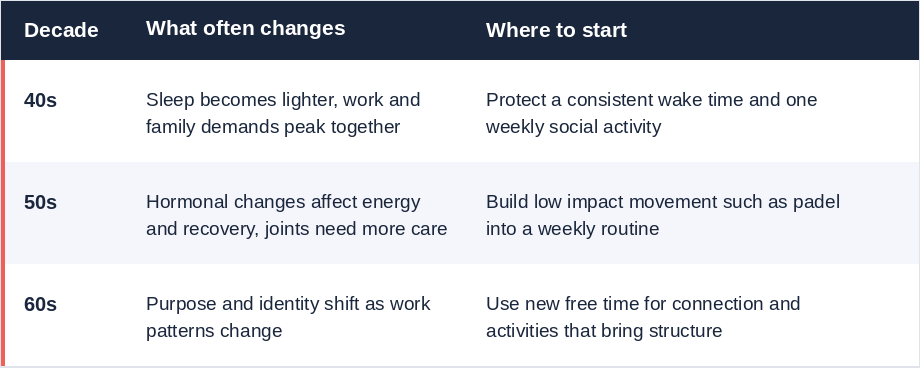
Where To Start This Week
Pick one pillar rather than trying to fix all four at once. Small, repeatable changes beat ambitious ones that do not last a fortnight.
Sleep
Pick one consistent wake-up time, weekdays and weekends, and get outside within an hour of waking. This does more for sleep quality than an earlier bedtime.
Stress
Put one proper recovery slot in the diary each week, not just less to do, but time that is actually protected from it.
Connection
Add one recurring social activity, padel, a walk, a standing catch-up, and treat it with the same priority as a work meeting.
Purpose
Notice what you looked forward to this month. If nothing comes to mind straight away, that is the pillar to work on first.
How This Connects to the Rest of The Longer Game
Wellbeing is the foundation all the other life areas build on. Better sleep supports performance in Sport & Fitness, lower stress makes Travel & Adventure easier to plan and look forward to, steadier energy levels support better choices in Healthy Eating & Nutrition and a clearer sense of purpose feeds into positive Work & Life Balance decisions. Improving wellbeing is rarely the fastest win, but it is usually the one that makes every other change stick.
Frequently Asked Questions
Q: What does wellbeing mean in your 40s to 60s?
It covers sleep, stress, connection and a sense of purpose, alongside physical health. The parts support each other rather than working in isolation.
Q: Where should someone start improving their wellbeing at midlife?
Pick one lever rather than all of them at once. A consistent sleep and wake time, one weekly social activity such as padel and a short daily walk cover sleep, connection and stress with very little extra time.
Q: How much sleep do people need at 40 to 60?
Most adults still need around 7 to 9 hours. What changes most in midlife is sleep quality rather than the total hours needed, so a consistent routine tends to matter more than chasing a specific number.
Q: Is stress really worse in midlife, or does it just feel that way?
The figures back it up. Work-related stress, depression and anxiety accounted for around 964,000 reported cases in the UK in 2024/25, and midlife is typically when career, family and caring responsibilities peak at the same time.
Q: How does wellbeing connect to the other life areas at The Longer Game?
Wellbeing sits underneath Sport & Fitness, Healthy Eating & Nutrition, Travel & Adventure and Work & Life Balance, so all 5 life areas reinforce each other.
FLEXIBLE WORKING
How to Work Less in Three Years. A Practical Framework
Know your number
Determine your baseline income by calculating the actual cost of your lifestyle. Many find this number drops significantly once work-related expenses like commuting and convenience spending are removed.

Build the bridge
Create a financial buffer through savings, redundancy payments, or a phased transition. A deliberate “bridge” provides the stability and choices needed to move into independent work on your own terms.
Start before you leave
Don’t wait until you’ve quit to build your independent future. Expand your network and establish your reputation while still employed to ensure momentum the moment you make the move.
Latest
Work & Life Articles
Which Padel Shoes Do You Actually Need? Indoor, Outdoor and Why It Matters.
Walk into any padel club in the UK and you’ll spot them: the new players, still working on their swing, wearing the same trainers they use on their morning run or even worse fashion trainers. Most have no idea there’s…
The Best Padel Balls in 2026: A Practical UK Guide
Most beginners spend forty minutes choosing a racket and about three seconds grabbing whatever balls are left in the basket. Here’s why that’s worth reconsidering and the best options to buy at every level and
How to Find a Padel Court Near You in the UK
Here's the short version: padel is arguably the most accessible, sociable and genuinely fun sport to pick up as an adult - and the UK has gone absolutely mad for it. Whether you're 42 or 62, a complete non-sporty type…