Walk into any padel club in the UK and you’ll spot them: the new players, still working on their swing, wearing the same trainers they wear to run in, or even worse fashion trainers. Most have no idea there’s a problem. Some find out the hard way.
There’s a lot of content online about ‘beginner padel shoes’ and most of it is telling you the wrong thing. The truth is that there is no separate category of shoe for beginners. The shoes you need depend almost entirely on the surface you’re playing on: indoor or outdoor.
What you should never do is play in running shoes. What matters above everything else is the grip pattern on the sole. Get those two things right and you’re equipped.
TLG TIP
The question isn’t ‘which shoes are best for beginners?’ It’s which shoes are right for the court you’re playing on. Get that right and everything else follows.
Why Running Shoes Are Never The Answer
Running shoes are designed and engineered for one thing: travelling forward. The cushioned heel, the rounded outsole, the toe-flex all of it propels you forward, stride after stride. In padel, almost none of that helps you.
Padel demands explosive lateral movement: rapid side-to-side sprints, sudden stops, pivoting up to 360 degrees when you’re playing the ball off the back wall. Running shoes aren’t designed for this type of movement and compress unpredictably under that kind of lateral load. The result is reduced stability at the exact moment you need it most.
There’s also the court: running shoe soles tend to leave black marks on padel surfaces, that’s a real no no and something the club manager will pick you up on immediately. Ankle support is minimal by design. For a sport where ankle sprains are the most common injury, that matters.
TLG TIP
The bottom line on running shoes. They’re not suitable for padel. Not as a temporary option, not for a taster session if you can avoid it.
Indoor Vs Outdoor. The Decision Which Actually Matters
The most important decision in padel footwear isn’t brand or price point – it’s surface. Indoor courts and outdoor courts require a different sole pattern and using the wrong one affects both your grip and your stability.
Outdoor Courts: Herringbone is What You Need
The vast majority of outdoor padel courts in the UK use artificial grass with a sand dressing, a surface that’s quite forgiving for joints but demands a specific type of grip.
The sole you need on an outdoor padel court is a herringbone pattern: the diagonal grid tread that channels sand and allows controlled lateral sliding without slipping. You’ll see this described as ‘herringbone outsole’ or ‘clay court’ in most shoe descriptions.
If you already own clay-court tennis shoes – if you‘re a squash or tennis player, these will perform reasonably well on outdoor padel courts when you first start out. Brands like Nike, On and K-Swiss don’t have dedicated padel ranges, but their clay-court tennis shoes are a workable alternative.
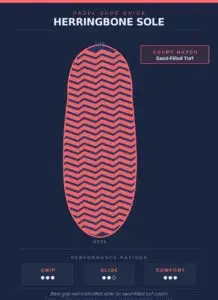
Purpose designed padel shoes go further: they’re reinforced at the toe cap for the toe-dragging that’s inherent in padel footwork and the outsole compounds are formulated specifically for sand-dressed artificial grass. Brands with padel ranges include Head, Adidas, Nox, Babolat, ASICS, Joma, Drop Shot, Bullpadel and Wilson.
Indoor Courts: A Different Grip Entirely
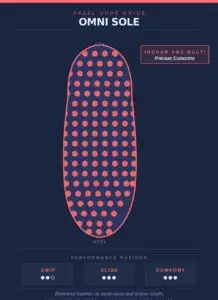
Indoor padel courts, increasingly common at the newer UK venues, use a smooth artificial surface, sometimes referred to as indoor artificial grass. This surface requires a completely different sole pattern: a flat or multi-directional grip rather than a herringbone.
Wearing herringbone soles on a smooth indoor court can actually be counterproductive, the raised pattern doesn’t engage the surface correctly and can cause unpredictable sliding. Indoor padel shoes have a much flatter sole profile designed for controlled movement on smooth surfaces.
If you play regularly at a mix of indoor and outdoor venues, it’s worth having a pair of shoes for each. If budget is a constraint right now, choose based on where you play most often and reassess as you play more.
Purpose designed padel shoes go further: they’re reinforced at the toe cap for the toe-dragging that’s inherent in padel footwork and the outsole compounds are formulated specifically for sand-dressed artificial grass. Brands with padel ranges include Head, Adidas, Nox, Babolat, ASICS, Joma, Drop Shot, Bullpadel and Wilson.
TLG TIP
Which court surface do you play on? If you’re not sure, ask the club. Most UK padel venues will confirm whether their courts are indoor (smooth) or outdoor (sand-dressed artificial grass). It’s the single most useful piece of information for buying the right shoe.
The Padel-Specific Design Feature Most People Don’t Know About
One feature sets proper padel shoes apart from tennis shoes most visibly: the pivot disc.
On the ball of the sole, most padel shoe designs incorporate a circular disc, often visually distinctive — designed specifically to facilitate pivoting. In padel, you routinely pivot up to 360 degrees when playing the ball off the back and side walls. This is a movement pattern that simply doesn’t occur in tennis and tennis shoe soles are not designed for it.
The pivot disc provides a smooth, centred rotation point while maintaining grip in all other directions. It reduces the rotational resistance that can cause ankle stress during those full-body pivot shots and it protects the sole from the uneven wear that pivoting creates on a standard outsole.
If you play on indoor courts – where pivoting is more prevalent due to the faster surface, this is a feature worth actively looking for when choosing a new pair.
pivot disc example
Brands: Who Makes Proper Padel Shoes
Not every major footwear brand has a padel range. Nike and On (On Running) currently don’t produce padel-specific shoes. If you see a shoe from these brands marketed for padel, it’s a repurposed tennis or court shoe – which can work but won’t have the padel-specific features described above.
The brands with dedicated padel ranges – including proper herringbone outsoles, pivot discs and reinforced toe protection:
- Head – strong padel heritage, well-specified across all price points
- Adidas – good range of padel-specific models available in UK retail
- Nox – padel-native brand with strong performance credentials
- Babolat – excellent outdoor padel shoes with proper herringbone construction
- ASICS – solid padel range building on strong court shoe expertise
- Joma – large range of high performance padel shoes designed for all levels of player
- Drop Shot – Premium padel gear and accessories for all levels
- Bullpadel – World leading padel specialist brands, trusted by professionals and newbies
- Wilson – Premier padel brand – high performance footwear and specialised rackets
For budget players or anyone playing on outdoor courts who already owns clay-court tennis shoes from another sport, those shoes are a reasonable starting point. But once you’re playing regularly, particularly if you’re mixing indoor and outdoor courts, investing in a proper padel shoe from one of these brands is the right call.