


Wellbeing is part of all 5 life areas at The Longer Game and it is the one that quietly determines how much you get out of all the others. Sleep, stress, relationships and a sense of purpose shape how well you move, eat, travel and show up at work. This article covers what really changes at 40s and beyond, why it happens and where to focus first, decade by decade.
Why Wellbeing Sits Underneath Everything Else
At The Longer Game – wellbeing is not treated as a soft, fluffy additional life area – just there to tick boxes. It is an integral part of Sport & Fitness, Healthy Eating & Nutrition, Travel & Adventure and Work & Life, because it determines how much benefit you actually get from these other life areas.
– A great padel session means less if you only managed to sleep four hours the night before
– A well planned active holiday is harder to enjoy if stress has left you running on empty before you even depart
– A promising career pivot is harder to commit to if you’re already questioning your sense of purpose
Wellbeing at this life stage covers four connected areas, sleep, stress & mental load, relationships & connection and a sense of purpose or direction. None of these elements work in isolation. A small improvement in sleep tends to lower stress, which makes it easier to show up for friends and family, which in turn supports a stronger sense of identity outside of work.

Sleep Changes Once You Reach your 40s and That Is Normal
Sleep quality shifts for most people from their 40s onward. Lighter sleep stages, more frequent waking and hormonal changes all play a part – the effect is often felt more in energy and mood the next day than in total hours slept. This is not a sign that something is going wrong, it is a normal part of this life stage and one that responds well to a few consistent habits.
For women – perimenopause and menopause can disrupt sleep directly through night sweats and hormonal fluctuation. For men, testosterone decline and rising stress hormones play a similar role. Both groups benefit from the same basic structure, even though the underlying cause differs –
- Keep to a consistent wake time, even on weekends, since this anchors the body clock more reliably than a fixed bedtime
- Get outside for natural light within an hour of waking to support the same body clock
- Treat the last hour before bed as wind down time – away from screens and work email
- Limit caffeine from earlier afternoon onwards – sensitivity to caffeine tends to increase with age – something else to bear in mind
- Keep the bedroom cool, as temperature regulation aids sleep
Stress and Mental Load in Midlife
Your 40s to 60s are often the busiest of your life – career responsibility at its peak, family demands pull you in both directions – supporting children and ageing parents at the same time. Stress at this stage is rarely one big event, it is usually the accumulated weight of many smaller ones. Recognising that mental load is real and managing it is the first step and protecting pockets of recovery time matters as much as any single relaxation technique.
This is also the period when financial pressure peaks – mortgages, school or university costs and retirement planning, all landing in the same decade. None of this is solved by one piece of advice, but a few structural habits make a measurable difference.
- Block out time for yourself in your calendar – the same way you would book a meeting, rather than waiting for free time to appear – because you know it never will
- Separate work stress from home stress with a clear end of day routine, even a five minute walk between the two – especially if you work at home, that separation is important at the end of the day
- Notice the difference between productive stress that comes from a real deadline and background stress that has become a habit
Relationships and Connection
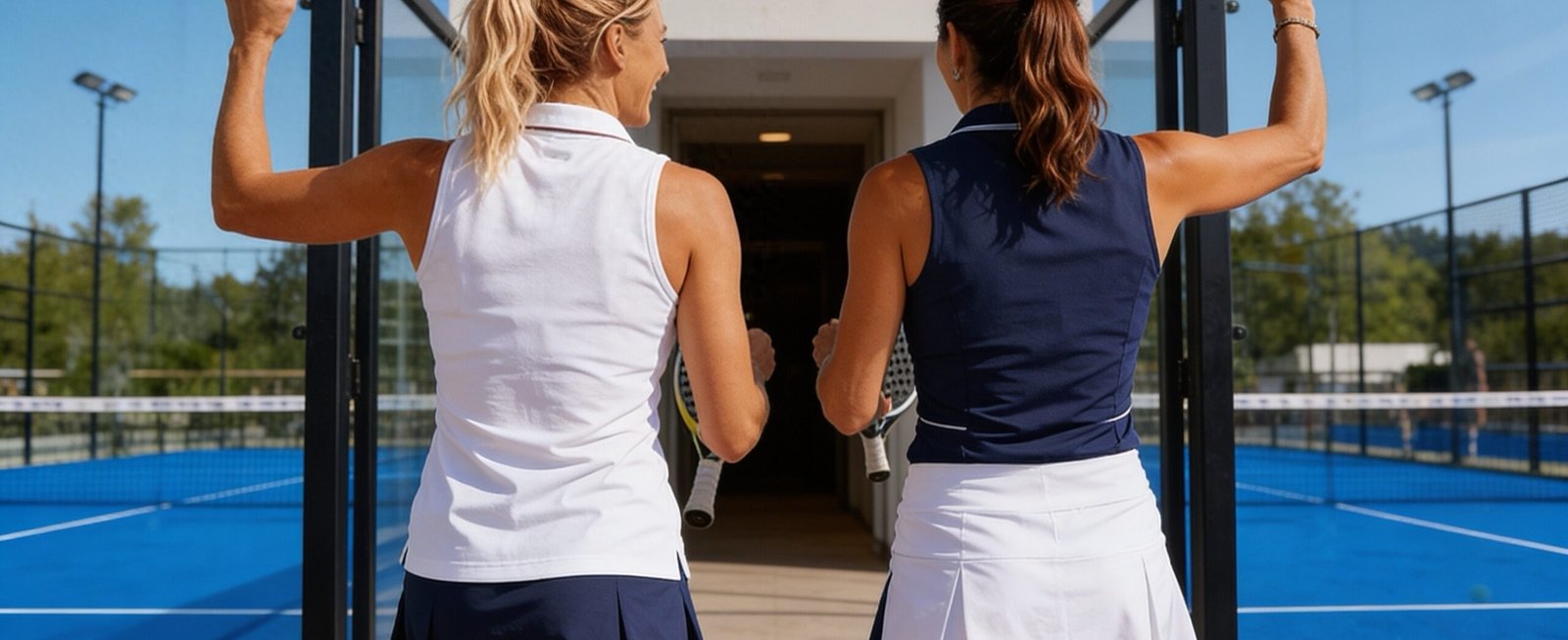
Friendship and social connection naturally take more effort to maintain in midlife, as careers, family life and geography pull people in different directions. Connections which once happened by default – at the school gates or kids clubs, in the office or a quick drink in the pub after work, now needs to be organised in advanced – the spontaneity and ease goes. This is part of why social sport works so well now. A weekly padel match with friends ticks two boxes, supporting fitness and provides the kind of regular face to face connection which becomes harder to find by default once your forties, fifties and 60s are in full swing.
Romantic relationships also tend to enter a new phase during this period – once children need less hands-on care. Couples who actively build new shared activities benefit more than those who simply continue the same old routines.
TLG TIP
Start With the Free Padel Beginner’s Guide
If movement and connection are the part of wellbeing you want to tackle first, our FREE Padel Beginner’s Guide covers courts, kit and rules so you can get on court with friends without overthinking the setup. It is the easiest entry point into the Sport & Fitness life area and a natural complement to everything in this article.
Purpose and Identity From Your 50s Onwards
As children become more independent and work patterns begin to shift – looking towards retirement, many people in their 50s and 60s find that roles which once defined a large part of their identity start to change shape. This can feel disorientating even when the change itself, such as a child leaving home or a reduction in work hours, is a positive one. The most resilient response can involve building new sources of structure and identity well before they are needed, rather than waiting until a role disappears to look for what replaces it.
Volunteering, mentoring, creative projects and committed hobbies all serve this purpose, it can also build the kind of community which evolves around a shared enjoyment of a sport (yes we know back to padel!). The specific activity matters less than the consistency and the sense of contribution it gives you.
What Changes Across the Decades
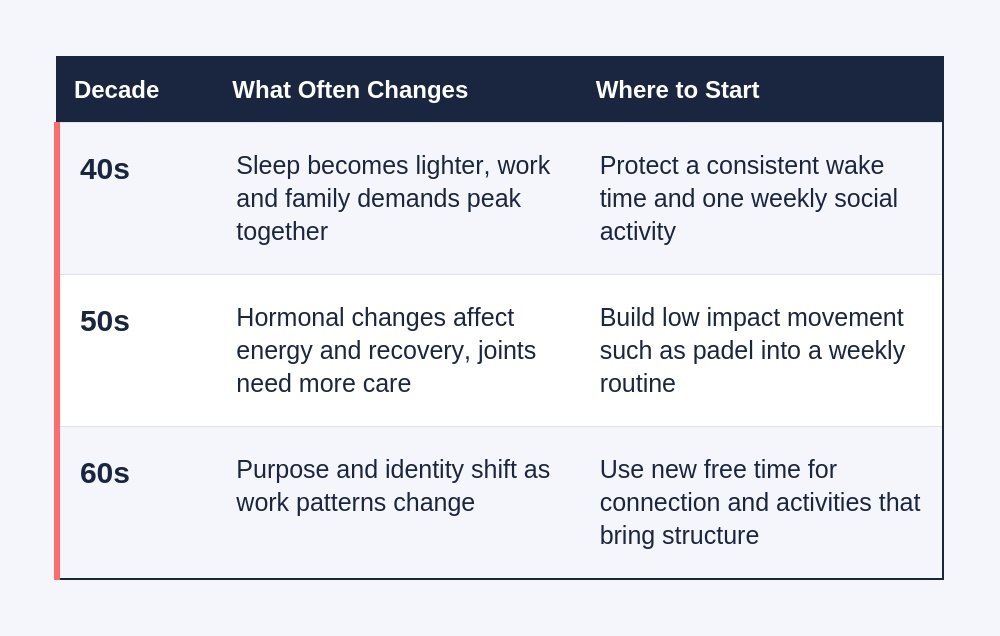
Wellbeing priorities gradually shift throughout your 40s, 50s and 60s, rather than feeling like a switch flipping overnight. This table sets out what matters most at each stage and a starting point worth focusing on.
How This Connects to the Rest of The Longer Game
Wellbeing is the foundation that the other life areas are built on. Better sleep supports performance on the padel court covered in Sport & Fitness. Lower stress makes it easier to plan and enjoy the active travel featured in Travel & Adventure. Stable energy and mood make it easier to stick to the nutrition habits covered in Healthy Eating & Nutrition. A clearer sense of purpose feeds directly into the career and time decisions covered in Work & Life Balance. Reading this article is the starting point, then follow whichever life area matches what you want to change first.
The Longer Game
Frequently Asked Questions
Q: What does wellbeing mean for people in their 40s, 50s and 60s?
During your 40s to 60s – wellbeing covers sleep quality, stress recovery, relationships, a sense of purpose and physical health together, rather than any single element on its own.
Q: Why does sleep get harder after 40?
Hormonal shifts, higher stress loads and lighter sleep stages all become more common from your 40s onward and many people are also carrying more responsibility at work and at home.
Q: Is it normal to feel more stressed at 40 to 60 than you did at 20 to 30?
Yes. Career responsibility, family demands and financial pressure often peak together during this period and the stress is usually accumulated rather than caused by one event.
Q: Why do friendships get harder to maintain in midlife?
Careers, family life and geography pull people in different directions from your 40s onward, so connections which once happened naturally now needs to be more organised.
Q: Can sport and movement actually improve wellbeing, not just fitness?
Yes. Social, low impact sport such as padel supports wellbeing through connection, stress release and a reliable routine, not only through calories burned or muscle gained.
Q: What changes about purpose and identity from the 50s onward?
As children become independent and work patterns shift toward retirement, many people find they need a new source of structure and identity, which is why having activities and communities in place ahead of that shift matters.
Q: Where should someone start if they want to improve their wellbeing at midlife?
Start with one element rather than all of them at once. A consistent sleep and wake time, one weekly social activity such as padel and a short walk outdoors most days cover sleep, connection and stress with very little extra time.
Latest
Articles
Indoor Vs Outdoor Padel UK: Which Is Right For You?
Indoor courts give you consistent conditions all year. Outdoor courts are more accessible and cheaper to book. The right answer depends on when you play, what you wear and how seriously you want to take it.
I Quit Squash at 45 Because of my Knees – Why I Started Padel
A personal account of swapping a sport I loved for the one that loves my body back and why this might be the most important sporting decision I've made in twenty years.
How to Work Less in Three Years Without Blowing Up Your Career.
A practical roadmap for professionals who know the current pace and direction isn’t sustainable and is quietly working out what the alternative looks like. No fantasy, no silver bullets, just an honest plan.
A quick note on how we work: some of the links in our articles are affiliate links, which means if you buy something through them, we may earn a small commission at no extra cost to you. We only recommend gear and products we'd genuinely use ourselves, tested rather than guessed at. You can read more in our Affiliate Disclosure.