

A no-nonsense guide to choosing your first racket – with picks for every budget.
Padel is the fastest-growing racket sport in Europe and for anyone in their 40s, 50s or 60s who are discovering it for the first time, the first question is usually the same: which racket do I actually buy?
Walk into a specialist shop or scroll through Amazon and you will be confronted by rackets ranging from under £40 to well over £200, with shapes, materials and jargon that mean nothing if you have only played two sessions. This guide cuts through it.
We have picked the best beginner padel rackets available in the UK in 2026, explained what the specs actually mean for your game and joints and advise what to spend at each budget level. No padding, no fluff – just the information you need to make a smart first purchase.
TLG TIP
New to padel? Get The Longer Game FREE Beginner’s Guide to Padel – courts, rules, kit and where to play in the UK.
What Makes a Good Beginners Racket?
Shape
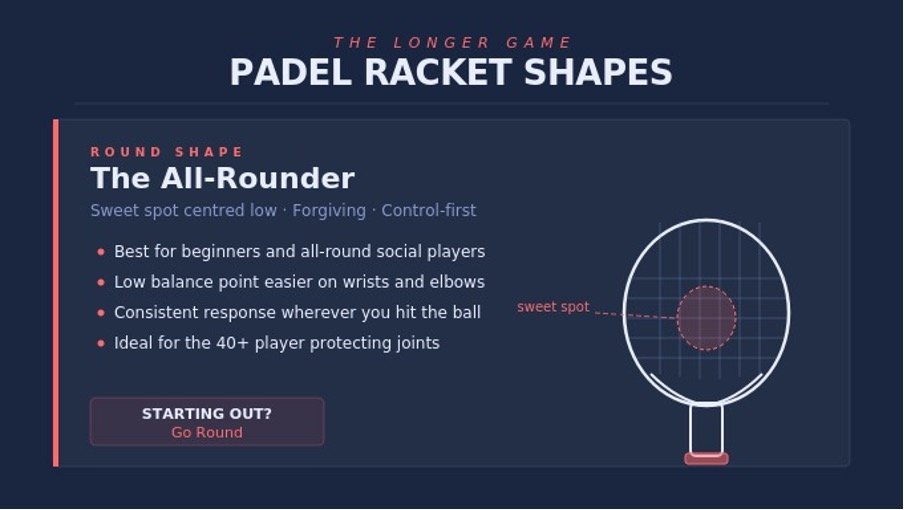
Round padel rackets are often seen as the ‘gold standard’ for beginners and control orientated players. The sweet spot (the forgiving central hitting area) is larger and positioned lower on the face, which means off-centre hits still go where you intend.
Core Material
Look for soft EVA or soft performance rubber. These absorb vibrations and provide better ball output (bounce), which help when you haven’t achieved a fast swing (yet!). Fibre-glass faces compound this, they flex slightly on contact rather than transmitting, shock back through your arm. Carbon fibre is stiffer, more powerful and better suited to intermediate players.
Weight
Most beginner rackets run between 345g and 360g (for manoeuvrability) without the grip wrap. Lighter rackets are easier on the shoulder and elbow; heavier ones add power but tire your arm faster in a long social session. If you have any history of tennis elbow, start lighter.
Grip Size
Padel grips are smaller than tennis grips as standard. Most come at L1 or L2 (roughly equivalent to 4 and 4¼ inches). An overgrip will add a size if needed. Try before you buy if you can – most padel clubs have demo rackets.
The forever beginner racket the Nox MLIO Pro Cup is legendary. It works for everyone from total novices to pro players – including Miguel Lamperti.
The Best Beginner Padel Rackets in the UK 2026
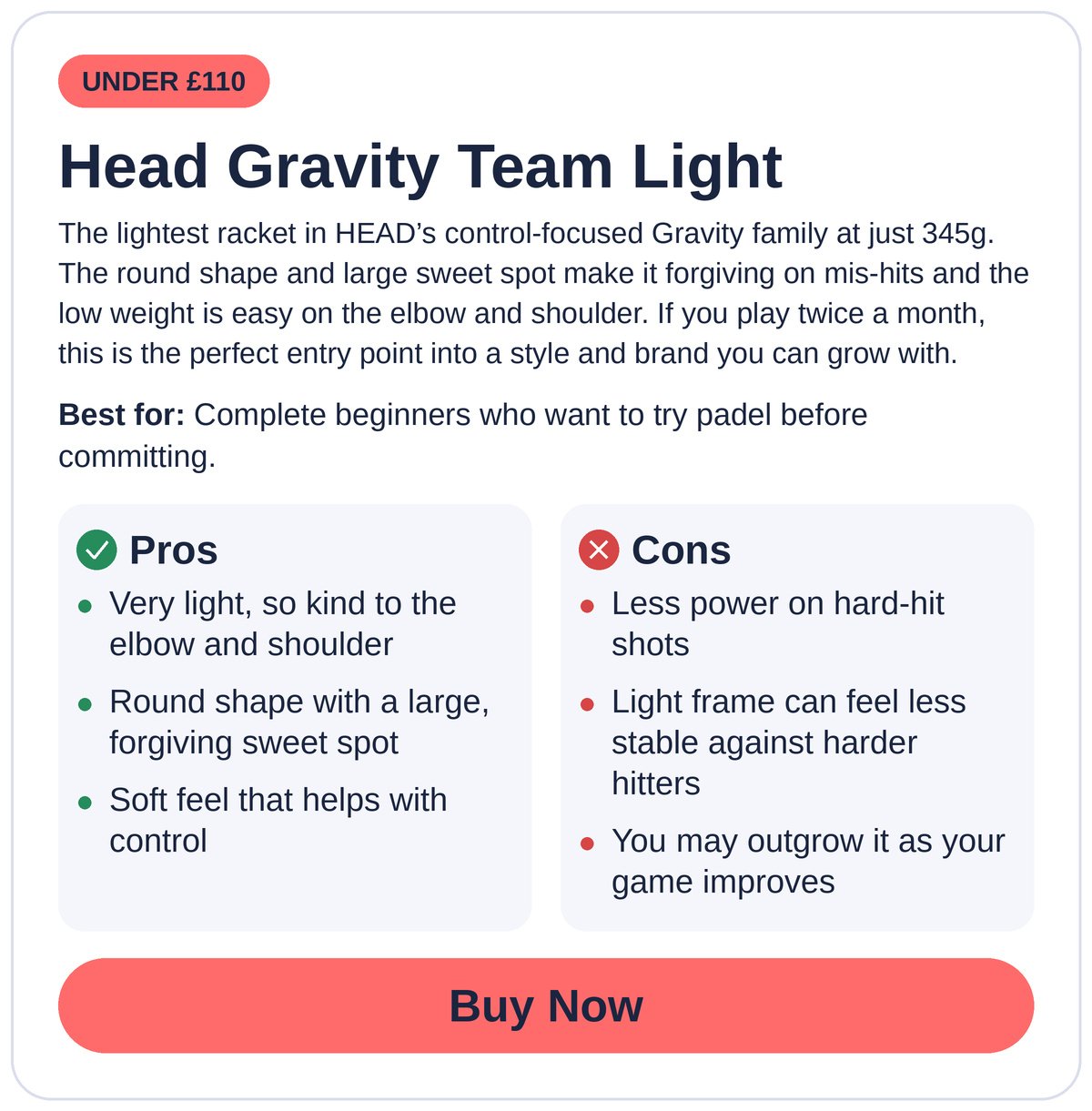
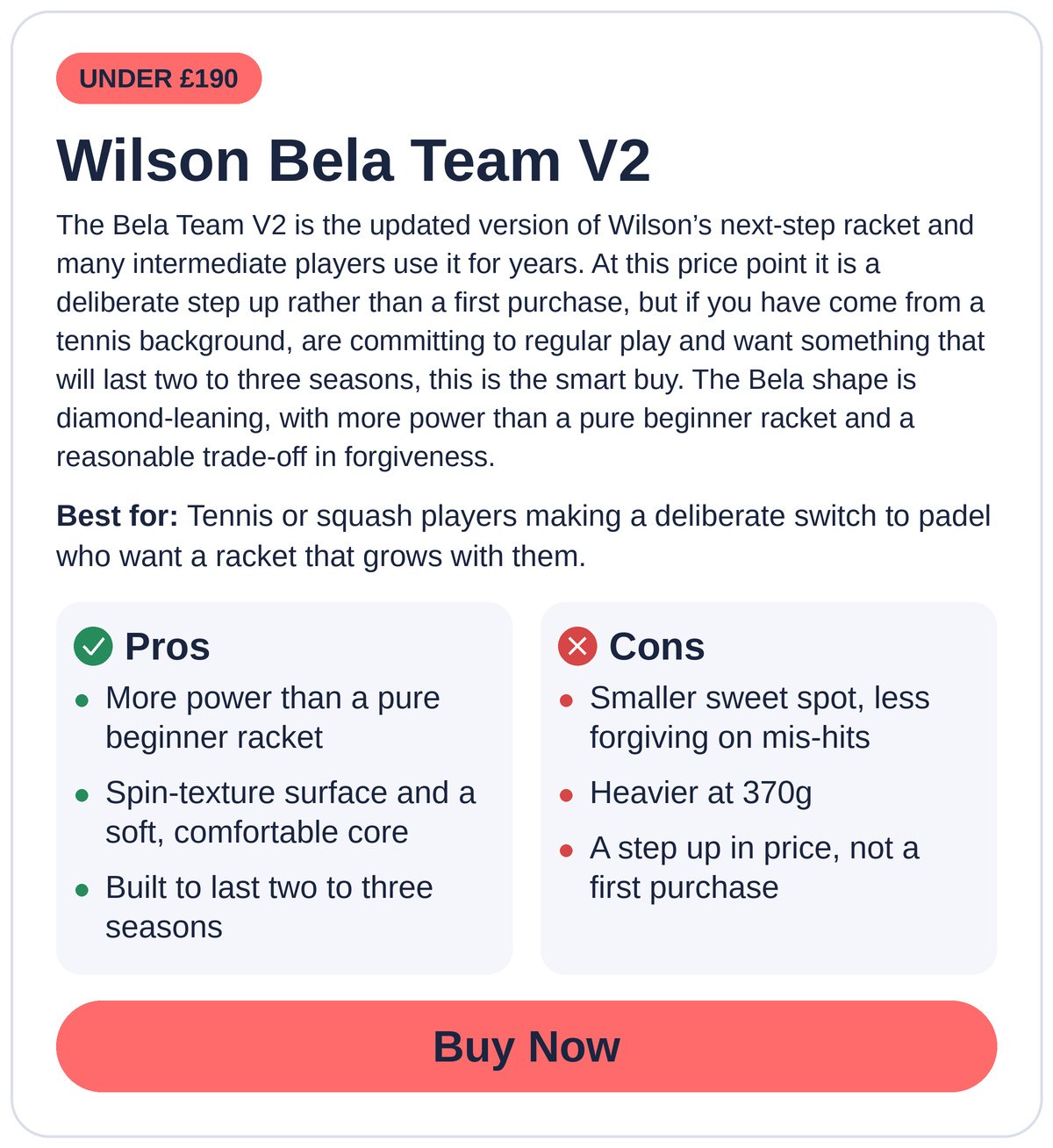
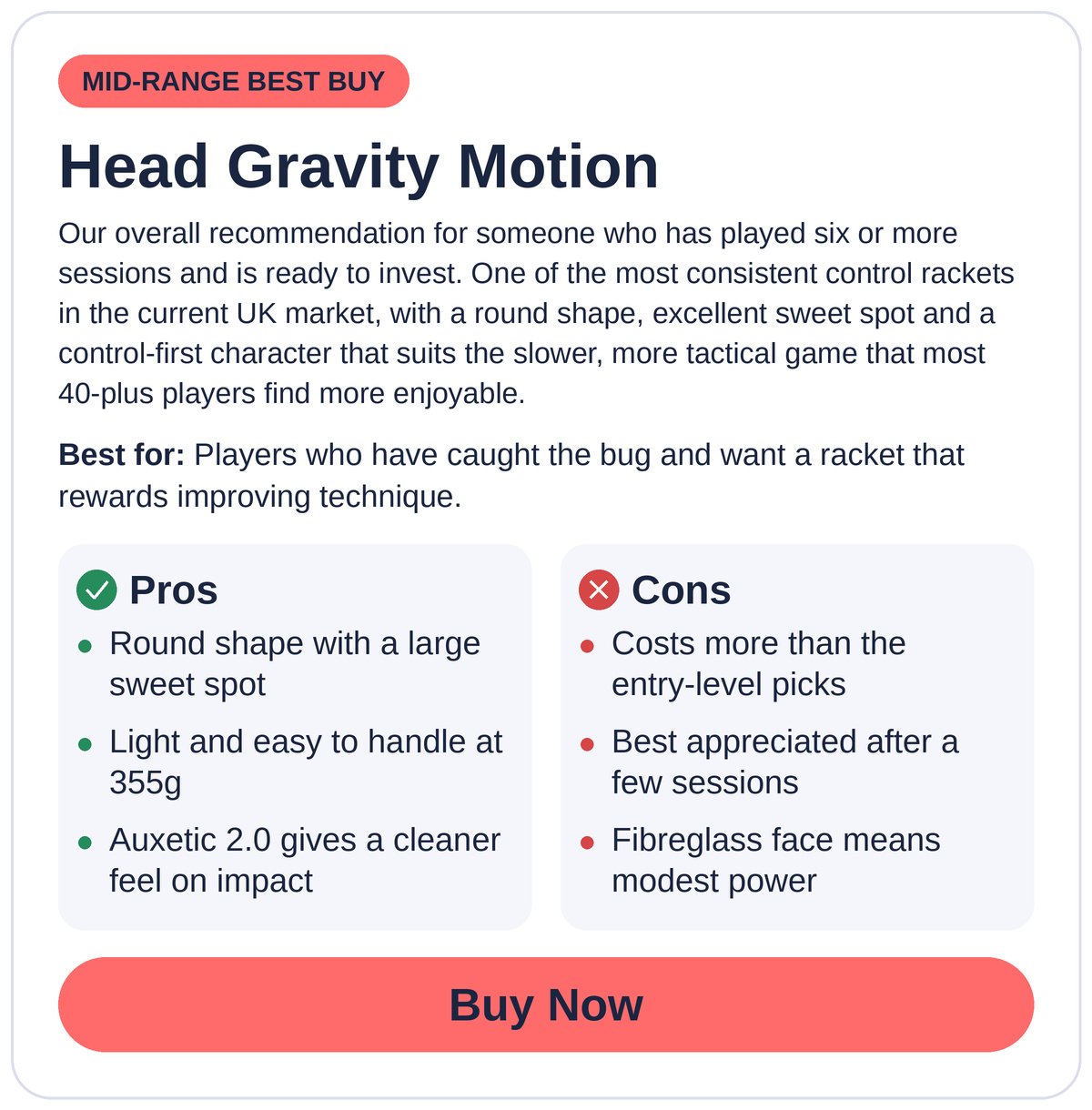
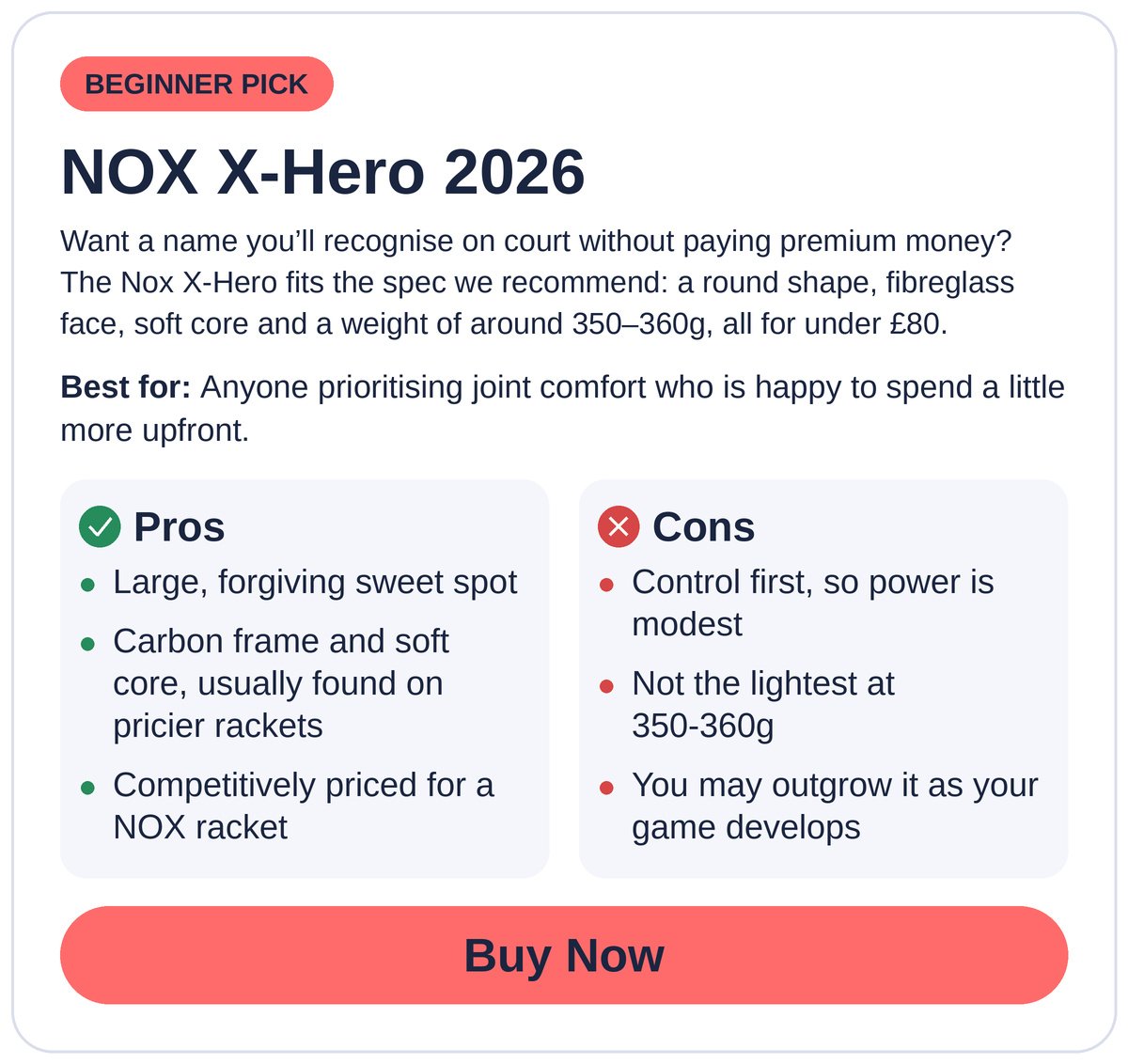
These are our picks across four price bands. All are widely available in the UK, all suit a beginner’s game, and all are kind to joints.
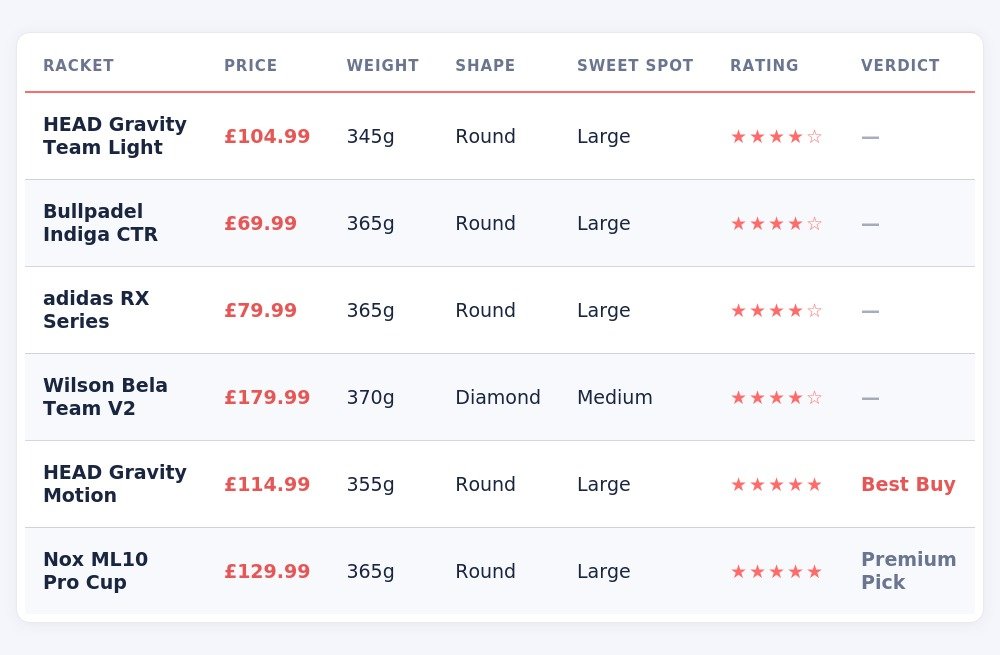
Prices are correct as of September 2026 and will vary by retailer. Always check the specialist padel retailers first – they tend to be competitive on price and can offer genuine advice.

Where to Buy Padel Rackets in the UK
The UK padel retail market has expanded significantly in the last three years. These are the most reliable options:
- Padel Market – good for Bullpadel and Head ranges specifically
- Decathlon – best for budget picks and quick delivery; stock varies by branch
- Amazon UK – convenient but check seller ratings carefully; counterfeits exist on marketplace listings
- Adidas – padel rackets are widely consider high-quality, reliable and well designed for players of every level
- Your local padel club pro shop – worth checking before buying online; many clubs have demo rackets and will price-match
What Else Do You Need?
A racket alone does not get you on court. Here is the short list of what you actually need to get started:
- Padel balls: Head Padel Pro or Wilson Padel balls are the most common in UK clubs. Come in tubes of three; softer than tennis balls, reduced bounce in cold weather. Don’t use balls at the court, you don’t know how old they are!
- Shoes: This matters more than most beginners expect. Padel is played on artificial grass or porous concrete – you need omni-surface or padel-specific shoes with herringbone soles. Do not play in running trainers; your ankle will pay for it.
- Overgrip: A pack of three Tourna Grip or Wilson overgrips costs under £5 and makes a significant difference to how the racket feels in your hand. Worth adding to your first racket order.
- Bag: A padel-specific bag holds rackets without the grip catching. Not essential early on, any racket sports bag will do. When you do invest in a bag, consider a waterproof/weatherproof bag, which will keep your kit dry during an outdoor game in case of rain.
STARTER KIT ESTIMATE
- Racket (mid-range): £80–£120
- Shoes (omni-surface/clay court): £50–£90
- Balls (tube of 3): £5 – £7 (online) £7 – £11 (at a club)
- Overgrips (pack of 3): £5-£8
- The main thing is to see whether you like in before going mad
TLG TIP
Invest in a decent racket – as you develop your game you’ll upgrade. As your skills develops you’ll become more fussy about the balls and grips you invest in.
Racket Care and How Long They Last
A decent beginner racket played twice a week should last 18 to 24 months before the core starts to ‘deaden’. Signs it needs replacing –
- the racket starts to feel less responsive on impact
- You hear a slightly hollow sound on contact
- You notice visible delamination on the face
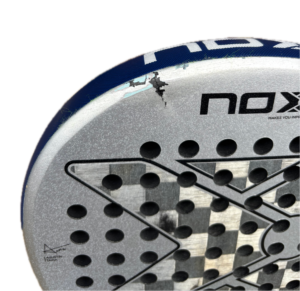
Other thing to consider is damage to your racket head. Once you start to feel confident in taking shots off the glass, there’s always a risk of clipping the racket on the glass or mesh, which can cause damage, especially if racket is carbon fibre. You might want to consider a racket head protector, But it can add additional weight – so it will be down to personal choice.
TLG TIP
Keep your racket out of the car boot in summer, (especially in British summers of late (heat degrades the foam core faster than anything. A basic cover (usually included) is sufficient protection.
The Bottom Line
You do not need to spend a lot to get started. A round-shaped beginner racket between £60 and £100, fibreglass face, foam core, in the 345 – 360g range will serve you well for up to a year. If you have any joint sensitivity, prioritise the softest core in your budget rather than the lightest weight or the most recognisable brand.
Padel rewards consistency over athleticism, social play over solo training and smart movement over power. Your racket should match that game. Pick one from the list, get on court and sort the rest out later.
Frequently Asked Questions
Q: What racket shape should a beginner buy?
Round. It has the largest, most forgiving sweet spot and is the most joint-friendly option, which matters most in your first year on court.
Q: Do I need a padel-specific racket, or can I use a tennis racket?
You need a padel racket. There is no string bed, the head shape and balance point are completely different, and a tennis racket will not perform on a padel court.
Q: How much should I spend on my first padel racket?
Between £60 and £100 is the sensible range for a first racket. You are buying court time at this stage, not kit, so there is little benefit in spending more before you know your game.
Q: What is the difference between EVA and foam cores?
Soft EVA foam absorbs more vibration and is kinder on the wrist and elbow, which is why it dominates the beginner and joint-friendly end of the market. Firmer cores add power but transmit more shock, so they suit players with an established, controlled swing.
Q: How long will a beginner racket last?
Played twice a week, expect 18 to 24 months before the core starts to deaden. Watch for a hollow sound on contact or visible delamination on the face as signs it needs replacing sooner.
Q: Can I try a racket before I buy it?
Yes, and you should if possible. Most UK padel clubs keep demo rackets, and it is the fastest way to feel the difference between shapes and core weights before committing.
Rackets are only one part of building a routine that actually sticks. For more on training, recovery and staying active without wrecking your joints in your 40s, 50s and beyond, head to Sport & Fitness.
A quick note on how we work: some of the links in our articles are affiliate links, which means if you buy something through them, we may earn a small commission at no extra cost to you. We only recommend gear and products we'd genuinely use ourselves, tested rather than guessed at. You can read more in our Affiliate Disclosure.